

Everyone talks about AI. But ask the simplest question—what is it?—and the answers dissolve. Depending on who you ask, AI is a chatbot, a simulation of the brain, a logic engine, or a rational agent. The confusion isn’t accidental. It tells us something about what intelligence itself really means.
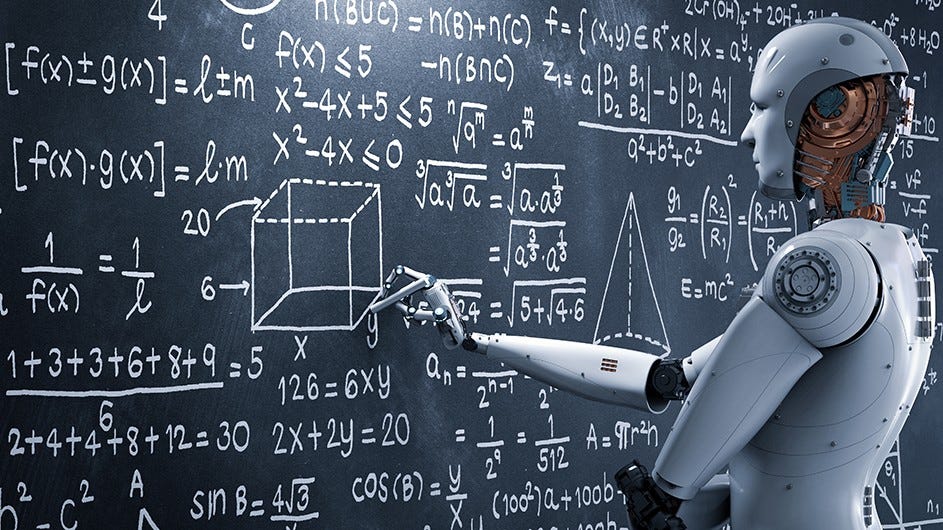
What is artificial intelligence?
This is not a trivial question. There is no single, agreed-upon definition of AI. Instead, AI emerges as a constellation of goals, methods, and analogies—drawn from logic, neuroscience, economics, linguistics, psychology, and more. It is not one science, but a synthetic enterprise: a historical project to make machines do things that would require intelligence if done by humans.
To understand what AI really is, we must look at how different traditions have defined intelligence itself.
Four Definitions of Intelligence
From the early days of the field, scholars identified four major ways of framing the goal of AI:
1. Acting Humanly (The Turing Test Approach)
This is the most famous and arguably the most misunderstood. Inspired by Alan Turing’s 1950 proposal, it defines intelligence operationally: a machine is intelligent if it can carry on a dialogue indistinguishable from that of a human. The Turing test sidesteps metaphysical questions about consciousness or mind—it focuses only on behavior.
Passing such a test would require capacities in:
- Natural language processing
- Knowledge representation
- Automated reasoning
- Machine learning
But as critics noted early on, mimicking a human is not the same as thinking intelligently. The simulation may be superficial.
2. Thinking Humanly (The Cognitive Modeling Approach)
This tradition aims to replicate not just the outputs but the processes of human thought. To do so, researchers turn to:
- Introspection: tracking the structure of our own thoughts
- Psychological experiments: observing human decisions and errors
- Brain imaging: mapping cognitive functions to brain regions
If we can model how the brain reasons and learns, and replicate that in a machine, we get not just a smart machine—but a model of human cognition itself.
3. Thinking Rationally (The "Laws of Thought" Approach)
Rooted in philosophy and logic, this approach traces back to Aristotle’s idea that intelligence consists in reasoning correctly. Logicians from the 19th century onward built formal systems of deduction. AI systems inspired by this tradition try to make valid inferences—about the world, the future, or desired outcomes.
However, strict logical inference often requires:
- Complete knowledge
- Infinite computational resources
- Deterministic environments
Since the world is rarely like that, pure rational thought often proves insufficient.
4. Acting Rationally (The Rational Agent Approach)
This is the dominant view in modern AI. Here, intelligence is defined as goal-directed behavior under uncertainty. A rational agent is one that selects actions to achieve the best expected outcome, given limited information and time. This view draws from:
- Economic Theory
- Control theory
- Operations research
Rational agents don't have to mimic humans or reason formally; they just need to make good enough decisions in complex environments.
Not Just One Field: The Disciplinary Roots of AI
Because intelligence itself is complex, AI draws from many foundational disciplines. Here's how different fields have contributed:
- Philosophy gave AI its original questions: What is knowledge? How does reasoning work? Can minds be physical systems?
- Mathematics contributed logic and probability, enabling formal models of inference and uncertainty.
- Economics introduced rational choice theory, utility maximization, and game theory—all essential to modeling agents in multi-agent systems.
- Neuroscience helped map the structure and function of the brain, inspiring neural networks and brain-machine interfaces.
- Psychology (both behaviorist and cognitive) offered models of learning, perception, and decision-making.
- Computer engineering built the hardware to run intelligent systems, from ENIAC to GPUs optimized for machine learning.
- Cybernetics and control theory offered early models of feedback and self-regulation, foundational for adaptive behavior.
- Linguistics (especially after Chomsky) framed the problem of language understanding and led to computational linguistics and NLP.
AI was never just a branch of computer science. From the beginning, it was a hybrid effort—a quest to formalize and replicate intelligence itself, using every available conceptual tool.
The Modern Synthesis
Today's AI is dominated by machine learning, especially deep learning. These systems no longer rely on hand-coded logic or explicit reasoning. Instead, they learn patterns from data—often vast amounts of it. A deep learning model can now outperform humans in image recognition, speech transcription, and even some strategic games.
Yet this dominance of one paradigm shouldn't obscure the diversity of the field. Much of what makes AI useful or safe still relies on:
- Symbolic reasoning
- Knowledge representation
- Decision-theoretic planning
- Human-AI interaction
- Value alignment
The integration of learning systems with reasoning agents, real-time control, and natural language remains one of the great open challenges.
Why This Matters
In earlier essays, I argued that the future of AI depends on what we feed it and what we expect from it. But both of those hinge on a more basic literacy. To govern AI, use it wisely, or critique its risks, we need to understand what it is—not just how it works, but what kind of project it represents.
AI is not magic. It is a human-made system, built to model and automate certain forms of intelligent behavior. But depending on how we define that intelligence—human-like, rational, reactive, interactive—we get different systems, with different affordances and dangers.
If we mistake performance for understanding, we risk being dazzled. If we assume narrow competence means general wisdom, we risk delegating too much. If we know where each kind of AI comes from—and what it was built to do—we can begin to ask: What should it do? What do we want it to become?
AI is not magic. It is a human-made attempt to capture fragments of intelligence—sometimes human-like, sometimes ruthlessly rational. To govern it wisely, we must first see it clearly. If we mistake performance for understanding, or narrow skill for wisdom, we risk being dazzled. Better to keep asking the most basic, unsettling question: what, exactly, are we building?
*** Disclaimer: I used ChatGPT-4.0. as an editorial and language-refinement tool. The ideas and arguments are entirely my own, and I take full responsibility for them.